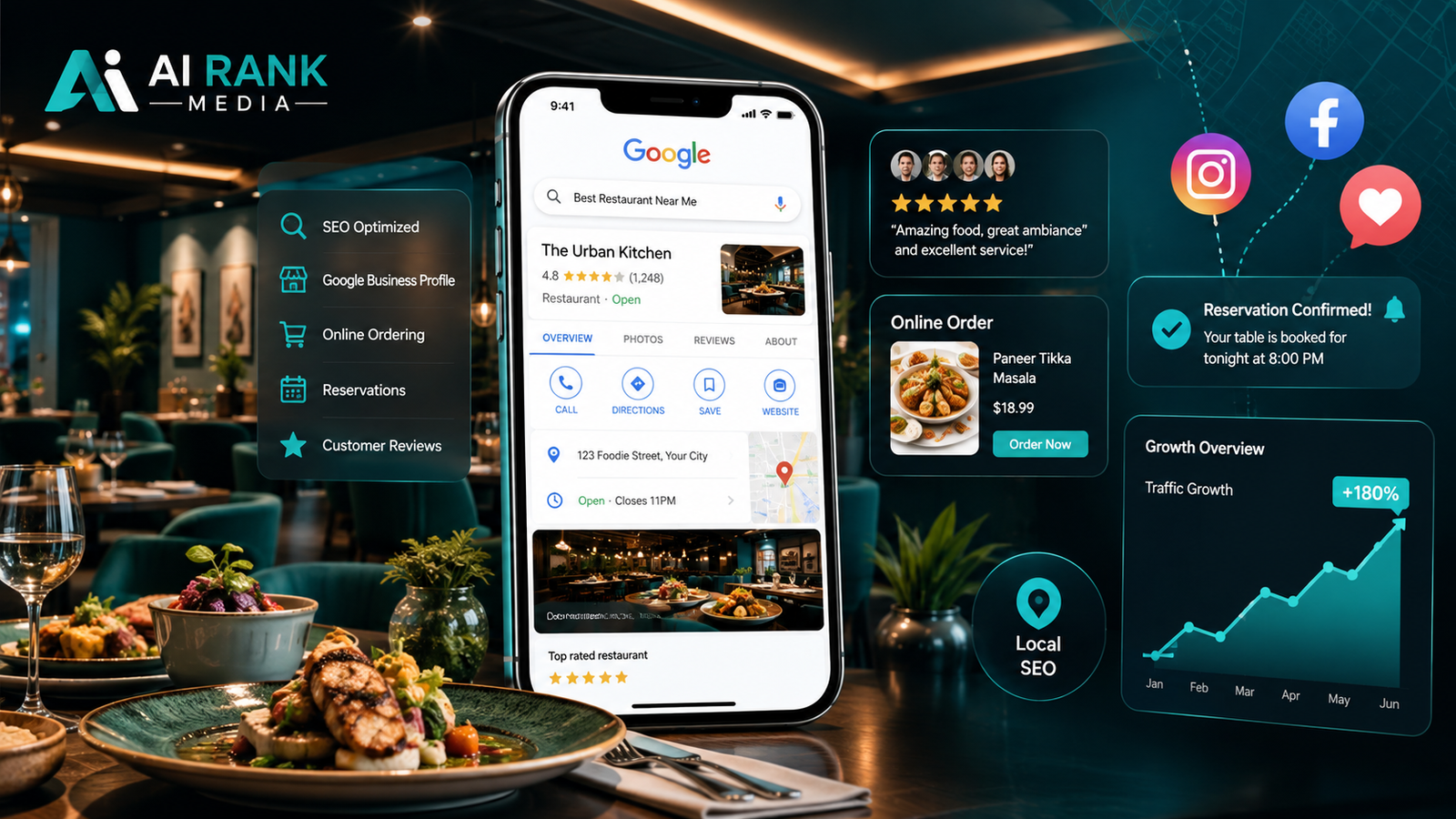
The restaurant industry is highly competitive. A restaurant may serve excellent food and provide great customer service, but attracting new customers consistently requires more than a good menu and attractive location.
Today, customers search online before deciding where to eat. They may search for “restaurants near me,” “best restaurants in Canada,” “Indian restaurant near me,” “family restaurants,” or specific dishes they want to try.
This makes digital marketing for restaurants an important part of building visibility, attracting local customers, increasing reservations, and generating online orders.
A strong digital marketing strategy helps restaurants appear where customers are searching, showcase their food, build trust through reviews, and make it easy for people to visit, reserve a table, or place an order.
What Is Digital Marketing for Restaurants?
Digital marketing for restaurants means using online platforms and marketing strategies to promote a restaurant, connect with potential customers, and encourage visits, reservations, orders, and repeat business.
Restaurant digital marketing can include:
- Local SEO
- Google Business Profile optimization
- Restaurant website optimization
- Social media marketing
- Online reviews and reputation management
- Content marketing
- Food photography and video marketing
- Online ordering promotion
- Email and customer marketing
- Paid advertising
- Local business listings
The goal is not simply to increase website traffic or social media followers. The goal is to turn online visibility into real customers and measurable restaurant growth.
Why Digital Marketing Is Important for Restaurants
Customers have more choices than ever. Before visiting a restaurant, they may check its Google listing, menu, photos, reviews, location, opening hours, and social media profiles.
If your restaurant is difficult to find online, customers may choose a competitor instead.
Digital marketing can help restaurants:
- Increase local visibility
- Attract new customers
- Promote menu items
- Increase reservations
- Generate online orders
- Build customer trust
- Promote special offers
- Increase repeat visits
- Strengthen brand awareness
For restaurants, being visible at the right moment can make a significant difference.
1. Optimize Your Google Business Profile
Google Business Profile is one of the most important online assets for a local restaurant.
When customers search for restaurants nearby, Google may display local business listings with information such as:
- Restaurant name
- Address
- Phone number
- Opening hours
- Website
- Menu
- Photos
- Reviews
- Directions
- Ordering options
Make sure your profile information is accurate and complete.
Add high-quality photos of your:
- Restaurant interior
- Exterior
- Popular dishes
- Menu items
- Dining area
- Team
- Special events
Keep your profile updated when your hours, menu, services, or offerings change.
You can also publish relevant updates about seasonal dishes, special events, promotions, or new menu items.
2. Focus on Local SEO
Restaurants depend heavily on local customers, making local SEO especially important.
Potential customers may search for:
- Restaurant near me
- Best restaurant in Canada
- Italian restaurant in Canada
- Indian restaurant near me
- Family restaurant in Canada
- Breakfast restaurant near me
- Best pizza in Canada
- Vegan restaurant near me
- Fine dining restaurant in Canada
Your website and online profiles should clearly communicate your restaurant’s location, cuisine, services, and unique value.
Instead of trying to rank for every possible keyword, focus on relevant searches that match your actual restaurant and target customers.
3. Build a Professional Restaurant Website
Your website should provide customers with the information they need before visiting.
Important website sections can include:
- Home
- About
- Menu
- Reservations
- Online Ordering
- Location
- Contact
- Gallery
- Reviews
- Events
- Frequently Asked Questions
Make your menu easy to access on mobile devices.
Your website should also clearly display:
- Address
- Opening hours
- Phone number
- Reservation options
- Ordering options
- Parking or location information, when relevant
A simple and convenient website experience can help turn visitors into customers.
4. Make Your Menu Search-Friendly
Your menu is one of the most important pieces of restaurant content.
Don’t rely only on a PDF or image if customers need to zoom in to read it.
Where appropriate, include important menu information as accessible website text.
You can highlight:
- Popular dishes
- Signature meals
- Vegetarian options
- Vegan options
- Gluten-free options
- Desserts
- Drinks
- Lunch specials
- Dinner specials
Use clear descriptions that help customers understand what they can expect.
5. Use Social Media Marketing
Restaurants are highly visual businesses, making social media an excellent way to attract attention.
Platforms such as Instagram, Facebook, TikTok, and Pinterest can help restaurants showcase their food and atmosphere.
Content ideas include:
- Food photography
- Short recipe or preparation videos
- Behind-the-scenes kitchen content
- Chef introductions
- New menu items
- Customer experiences
- Restaurant tours
- Seasonal dishes
- Special offers
- Events
- Food preparation videos
For example:
“Watch Our Chef Prepare Today’s Signature Pasta.”
or
“5 Dishes You Need to Try on Your First Visit.”
The objective is to create content that makes people interested in visiting or ordering.
6. Invest in Professional Food Photography
Food images can strongly influence customer decisions.
High-quality photography can make your restaurant’s website, Google profile, social media pages, and advertising more appealing.
Focus on capturing:
- Signature dishes
- Food presentation
- Restaurant atmosphere
- Dining experience
- Drinks
- Desserts
Use authentic images of your actual food and restaurant whenever possible.
Avoid misleading customers with images that do not accurately represent what you serve.
7. Encourage Genuine Customer Reviews
Online reviews are extremely important for restaurants.
Before choosing where to eat, customers often compare ratings and read recent reviews.
Encourage satisfied customers to leave honest feedback on appropriate platforms.
A good review strategy includes:
- Providing excellent customer service.
- Making it easy for customers to share genuine feedback.
- Responding professionally to reviews.
- Learning from recurring feedback.
- Addressing legitimate concerns appropriately.
Never buy fake reviews or create fake customer experiences.
Authentic reviews can help build credibility and give potential customers more confidence.
8. Respond to Reviews Professionally
Responding to reviews shows that your restaurant values customer feedback.
For positive reviews, thank customers for visiting.
For negative reviews:
- Remain professional.
- Avoid arguments.
- Acknowledge legitimate concerns.
- Provide a helpful response.
- Take the conversation offline when personal details are involved.
Your responses can also be seen by future customers, so professionalism matters.
9. Create Restaurant Content
Blog content can help your restaurant reach people searching for food-related information.
Potential topics include:
- Best Foods to Try at an Italian Restaurant
- How to Choose a Restaurant for a Family Dinner
- Best Date Night Restaurant Ideas
- What Makes a Great Brunch Experience?
- Popular Vegetarian Dishes to Try
- How to Plan a Restaurant Birthday Dinner
- Best Foods for a Weekend Lunch
- How to Choose a Restaurant for a Business Dinner
Content should provide genuine value rather than simply repeating keywords.
Include relevant information about your restaurant naturally when appropriate.
10. Use Video Marketing
Short videos can help potential customers experience your restaurant before visiting.
Create videos showing:
- Food preparation
- Plating
- Restaurant atmosphere
- Chef activities
- Customer experiences
- New dishes
- Special events
- Behind-the-scenes moments
Short-form video can be particularly effective for showcasing food because it combines visuals, movement, and storytelling.
11. Promote Online Ordering
If your restaurant offers online ordering, make the process easy to find.
Promote ordering options through:
- Your website
- Google Business Profile
- Social media
- Email marketing
- Digital advertising
Clearly explain available ordering methods and keep menu information up to date.
If third-party ordering platforms are used, make sure customers understand where and how they can place orders.
12. Promote Reservations
Restaurants that accept reservations should make the process simple.
Add clear reservation buttons to your website and social media profiles where appropriate.
Customers should be able to quickly understand:
- Available dining times
- Number of guests
- Reservation process
- Cancellation policies
- Contact information
Reducing unnecessary steps can improve the customer experience.
13. Run Targeted Restaurant Advertising
Paid digital advertising can help restaurants reach people in specific geographic areas.
You can promote:
- New menu launches
- Restaurant openings
- Special events
- Seasonal menus
- Lunch specials
- Dinner promotions
- Catering services
- Online ordering
- Holiday offers
Advertising should be targeted toward the restaurant’s actual service area and relevant audience.
Track meaningful actions such as reservations, calls, online orders, and enquiries instead of focusing only on impressions or clicks.
14. Use Seasonal Marketing
Restaurants can create campaigns around holidays and seasonal events.
Examples include:
Valentine’s Day
Promote romantic dining experiences, special menus, or reservation availability.
Christmas
Promote holiday dining, group meals, or special events.
Summer
Highlight outdoor dining, refreshing drinks, seasonal dishes, or events.
Winter
Promote comfort food, warm beverages, family dining, or seasonal menus.
Seasonal campaigns give customers a reason to visit or order now.
15. Build Customer Loyalty
Getting a new customer is valuable, but encouraging customers to return can be even more important for long-term growth.
Restaurants can use:
- Loyalty programs
- Email marketing
- Special customer offers
- Birthday promotions
- Seasonal updates
- New menu announcements
- Personalized recommendations
Always follow applicable privacy and marketing communication requirements.
The objective should be to provide useful and relevant communication rather than sending excessive promotional messages.
16. Use Email Marketing
Email marketing can help restaurants stay connected with customers.
You can send newsletters featuring:
- New dishes
- Seasonal menus
- Events
- Restaurant news
- Special offers
- Loyalty rewards
For example:
“Our New Summer Menu Is Here — Discover the Latest Dishes.”
Keep emails concise, useful, and relevant to the audience.
17. Promote Catering Services
If your restaurant provides catering, digital marketing can help attract additional customers beyond regular dining.
Create a dedicated catering page explaining:
- Catering menu
- Types of events served
- Group sizes
- Available packages
- Booking process
- Contact information
Target relevant searches such as:
- Catering near me
- Restaurant catering in [city]
- Corporate catering
- Party catering
- Wedding catering
This can open another source of revenue for your restaurant.
18. Track Your Digital Marketing Results
Restaurant marketing should be measurable.
Monitor metrics such as:
- Website traffic
- Google Business Profile interactions
- Calls
- Reservation requests
- Online orders
- Contact form submissions
- Social media engagement
- Advertising conversions
- Repeat customers
The most important question is:
Which marketing activities are generating actual restaurant customers and revenue?
Use this information to improve your strategy over time.
A Simple Digital Marketing Strategy for Restaurants
A practical restaurant marketing plan can include:
Step 1: Create a professional, mobile-friendly website.
Step 2: Optimize your Google Business Profile.
Step 3: Improve local SEO for relevant restaurant searches.
Step 4: Add accurate menu and service information.
Step 5: Publish high-quality food photos and videos.
Step 6: Build a consistent social media presence.
Step 7: Encourage genuine customer reviews.
Step 8: Promote reservations and online ordering.
Step 9: Create seasonal campaigns and special offers.
Step 10: Track calls, reservations, orders, and leads.
This creates a complete digital marketing system instead of relying on only one platform.
Common Digital Marketing Mistakes Restaurants Should Avoid
1. Incomplete Google Business Profile
Missing information can make it harder for customers to understand your restaurant.
2. Outdated Menu
Customers should be able to find current menu and pricing information where applicable.
3. Poor-Quality Food Photos
Weak visuals can make it difficult to communicate the quality of your dining experience.
4. Ignoring Customer Reviews
Reviews can influence restaurant selection, so monitor and respond to feedback professionally.
5. Inconsistent Social Media
Posting occasionally without a strategy can make your online presence look inactive.
6. Difficult Online Ordering
A complicated ordering process can result in customers abandoning their purchase.
7. Not Tracking Results
Without measuring reservations, orders, calls, and leads, you cannot easily determine what is working.
Frequently Asked Questions
How can digital marketing help a restaurant?
Digital marketing can help restaurants increase local visibility, attract new customers, promote menu items, generate reservations and online orders, build trust, and encourage repeat visits.
What is the best digital marketing strategy for restaurants?
A combination of local SEO, Google Business Profile optimization, social media marketing, customer reviews, professional food photography, content marketing, and targeted advertising can create a strong restaurant marketing strategy.
How can a restaurant get more customers from Google?
Restaurants can improve their Google visibility by maintaining an accurate Google Business Profile, using relevant local SEO, publishing quality photos, collecting genuine reviews, providing accurate menu information, and maintaining a useful website.
Is social media important for restaurants?
Yes. Restaurants are highly visual businesses, so social media can be an effective way to showcase food, atmosphere, new dishes, events, and customer experiences.
How can restaurants increase online orders?
Restaurants can make ordering easier through a mobile-friendly website, clear menus, visible ordering buttons, accurate information, social media promotion, and targeted digital campaigns.
Are online reviews important for restaurants?
Yes. Many customers consider reviews and ratings when choosing where to eat. Genuine reviews can help build trust and provide useful information to potential customers.
Final Thoughts
A successful digital marketing strategy for restaurants is about making your business easy to discover, easy to trust, and easy to choose.
From Local SEO and Google Business Profile optimization to social media, food photography, customer reviews, content marketing, online ordering, and targeted advertising, each channel can help create more opportunities for restaurant growth.
The most effective strategy is one that focuses on the complete customer journey: discover → learn → trust → visit/order → return.
If your restaurant wants to build a stronger online presence and attract more local customers, AI Rank Media can help develop a results-focused digital marketing strategy designed around visibility, engagement, lead generation, and business growth.




Leave a Reply