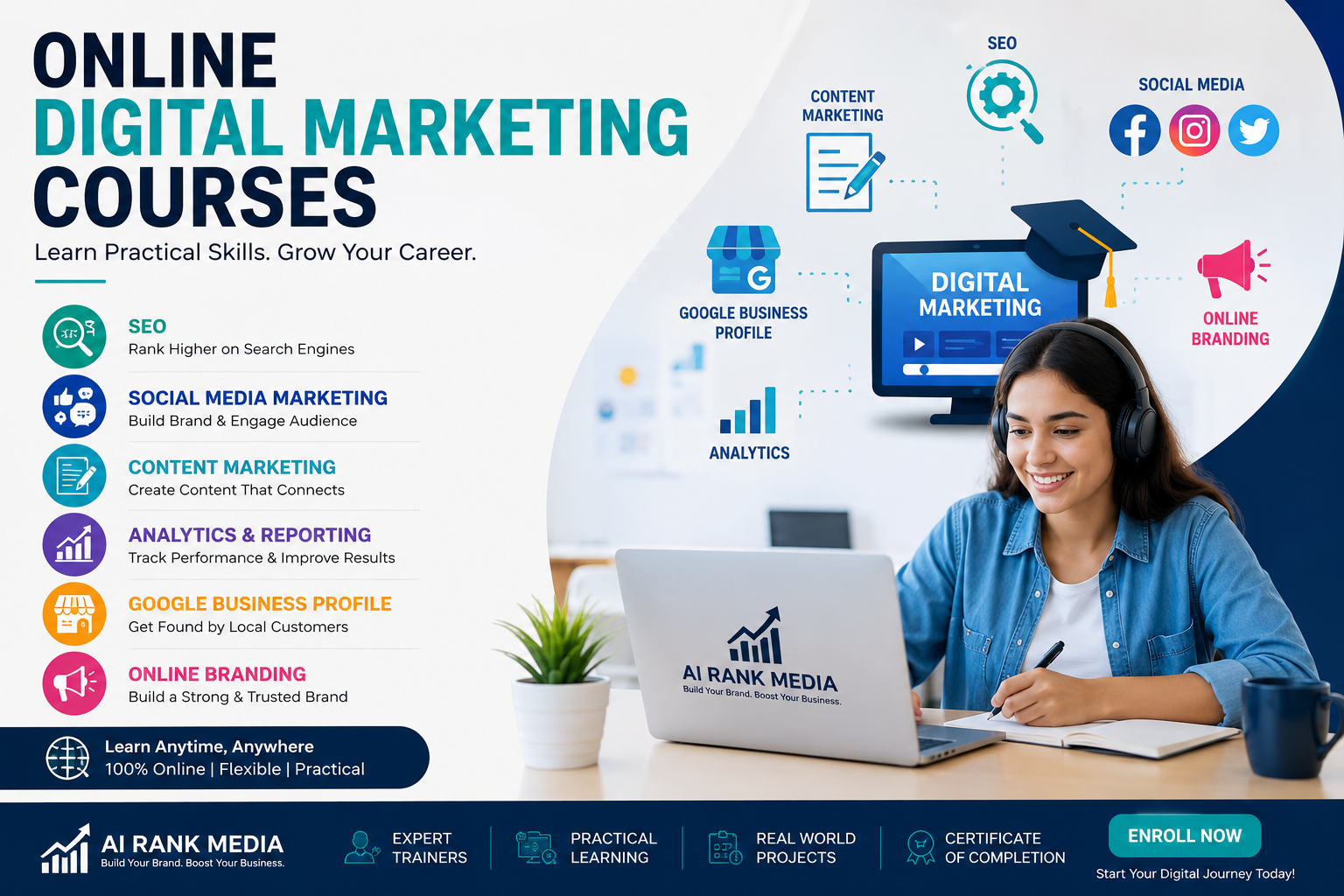
Digital marketing has become an essential part of modern business growth. From social media and search engines to content marketing and online branding, businesses need skilled professionals who understand how to reach the right audience online.
Online digital marketing courses provide a flexible way to learn these skills from anywhere. Whether you are a student, working professional, business owner, freelancer, or someone looking to start a career in digital marketing, an online course can help you build practical knowledge and confidence.
What Is Digital Marketing?
Digital marketing is the process of promoting businesses, products, and services through digital channels. These channels can include search engines, social media platforms, websites, email, online advertising, and other digital platforms.
A good digital marketing course helps learners understand not only individual marketing techniques but also how different channels work together to generate visibility, traffic, leads, and business growth.
Why Choose Online Digital Marketing Courses?
Online learning has made digital marketing education more accessible. You can learn at your own pace while continuing your studies, job, or business activities.
Some major benefits include:
- Flexible learning from anywhere
- Convenient access to course materials
- Practical understanding of digital marketing strategies
- Opportunity to develop job-ready skills
- Learning at your own pace
- Useful knowledge for freelancing and business growth
- Exposure to modern digital marketing tools and techniques
What Do You Learn in a Digital Marketing Course?
The exact curriculum varies from course to course, but a comprehensive program may cover several important areas.
1. Search Engine Optimization
SEO helps businesses improve their visibility in search engine results. Students can learn about keyword research, content optimization, on-page SEO, technical fundamentals, link building, and local search strategies.
2. Social Media Marketing
Social media marketing focuses on building a brand presence and engaging audiences on platforms such as Instagram, Facebook, LinkedIn, YouTube, and other relevant channels.
3. Content Marketing
Content is an important part of digital marketing. Courses can teach learners how to plan, create, optimize, and distribute content that provides value to a target audience.
4. Google Business Profile Optimization
For local businesses, Google Business Profile optimization can help improve local visibility and make it easier for potential customers to discover a business online.
5. Online Branding
Digital marketing also involves creating a consistent and recognizable online brand. Learners can understand how websites, social media, content, reviews, and other digital touchpoints contribute to brand visibility.
6. Analytics and Performance Tracking
Understanding results is essential. Digital marketing training can introduce learners to important performance metrics and help them understand how to evaluate campaigns and identify opportunities for improvement.
Who Should Take an Online Digital Marketing Course?
Online digital marketing courses can be useful for different types of learners.
Students
Students can develop practical digital skills alongside their academic education and prepare for entry-level opportunities.
Working Professionals
Professionals can learn new skills and expand their career options without necessarily leaving their current jobs.
Business Owners
Business owners can understand how digital channels work and make more informed decisions about their online marketing activities.
Freelancers
Freelancers can develop services such as social media management, content marketing, SEO, online branding, and other digital marketing solutions.
Career Changers
People planning to move into a new career can use digital marketing training to build foundational knowledge and practical skills.
How to Choose the Right Online Digital Marketing Course
Not every course provides the same learning experience. Before enrolling, consider the following factors:
Check the Course Curriculum
Look for a curriculum that covers the areas you actually want to learn instead of focusing only on theory.
Look for Practical Learning
Digital marketing is highly practical. A useful course should provide opportunities to work on examples, campaigns, websites, content, or other real-world marketing activities.
Consider the Learning Format
Choose a course format that fits your schedule. Self-paced courses can offer flexibility, while live classes may provide more direct interaction.
Review the Trainer’s Experience
The experience of the trainer can make a significant difference. Look for instructors who understand current digital marketing practices.
Check Support and Resources
Training becomes easier when learners have access to useful resources, guidance, assignments, or opportunities to ask questions.
Benefits of Learning Digital Marketing Online
One of the biggest advantages of online learning is flexibility. You can access educational content without being restricted to a physical classroom.
Online learning can also allow you to spend more time practicing specific areas where you need improvement.
For example, if you are particularly interested in Google Business Profile optimization, social media marketing, or keyword ranking, you can dedicate additional time to those topics.
Career Opportunities After Digital Marketing Training
Digital marketing skills can support a variety of career paths. Depending on your skills and experience, potential roles may include:
- Digital Marketing Executive
- SEO Specialist
- Social Media Manager
- Content Marketing Specialist
- Digital Marketing Analyst
- Local Marketing Specialist
- Online Branding Specialist
- Digital Marketing Freelancer
- Digital Marketing Consultant
Your career opportunities will depend on your practical skills, portfolio, experience, communication abilities, and understanding of current digital marketing trends.
Why Practical Skills Matter in Digital Marketing
Digital marketing changes frequently. Search algorithms, social media platforms, advertising technologies, content formats, and consumer behavior continue to evolve.
Because of this, learning only definitions and theories may not be enough.
Practical experience helps learners understand how to:
- Research a target audience
- Identify relevant keywords
- Create useful content
- Optimize online profiles
- Develop social media strategies
- Track marketing performance
- Improve online visibility
- Adapt strategies based on results
Can You Learn Digital Marketing Online Without Experience?
Yes. Beginners can start with fundamental concepts and gradually move toward more advanced topics.
The most important factors are consistency, practice, and willingness to keep learning. You do not necessarily need a technical background to begin learning digital marketing.
Starting with basic concepts and then applying them to practical projects can make the learning process easier.
Is Digital Marketing a Good Career Option?
Digital marketing can be a valuable career skill because businesses across many industries rely on online channels to communicate with customers and build their brands.
However, success in this field requires continuous learning. Instead of relying on one technique, digital marketers need to understand how different channels contribute to broader business objectives.
AI Rank Media and Digital Marketing Learning
AI Rank Media focuses on helping businesses improve their digital presence through practical digital marketing strategies. Learning digital marketing can help individuals understand the same online channels businesses use to increase visibility, build their brand, and connect with potential customers.
Whether your goal is to build a career, start freelancing, grow your own business, or strengthen your existing marketing skills, learning digital marketing can be a useful step toward developing a strong digital skill set.
Frequently Asked Questions
What are online digital marketing courses?
Online digital marketing courses are educational programs that teach skills related to promoting businesses, products, and services through digital channels such as search engines, social media, websites, content, and online platforms.
Are online digital marketing courses suitable for beginners?
Yes. Beginners can start with fundamental concepts and gradually learn more advanced digital marketing strategies through structured training and practice.
Can I learn digital marketing from home?
Yes. Online courses allow you to learn digital marketing remotely using a computer or other compatible device and an internet connection.
How long does it take to learn digital marketing?
The time required depends on the course, learning schedule, and individual’s goals. Basic concepts can be learned relatively quickly, while becoming proficient requires ongoing practice and experience.
What career options are available after learning digital marketing?
Depending on your skills and experience, you can explore opportunities in SEO, social media marketing, content marketing, digital marketing management, online branding, analytics, freelancing, and consulting.
Conclusion
Online digital marketing courses offer a flexible way to develop valuable digital skills without being limited by location or a traditional classroom schedule. From SEO and social media marketing to content, local visibility, analytics, and online branding, digital marketing training can provide a broad foundation for today’s online business environment.
The best approach is to choose a course that combines fundamental knowledge with practical learning and then continue building your skills through real-world projects.

Leave a Reply